





-
How Play-Based Learning Boosts Language Development in the Early Years
Language skills developed during the early years form the foundation for later academic success, social interaction, and self-confidence.
-
When Should Your Child Own Their First Smartphone? Study Says Not Before the Age of 13 or Their Mental Health Suffers
A groundbreaking global study of over 100,000 young people has revealed a strong link between early smartphone ownership and poorer mental health outcomes in adulthood.
-
Obese Children Now Outnumber Underweight Children for the First Time in (Recorded) History
For the first time in recorded history, the number of school-age children and adolescents living with obesity has exceeded those who are underweight, according to a recent report from UNICEF.
-
Transforming K-12 Education with CENTURY
CENTURY helps teachers make effective interventions and saves time on marking and data analysis. Trusted by schools and colleges globally, schools using our platform regularly for testing see score improvements of more than 15% across subjects and year groups.
-
The Importance and Challenges of Student Engagement in K-12 Education
A recent study, shared by Discovery Education, dives into the critical role student engagement plays in K–12 learning environments while shedding light on the challenges educators face in fostering and sustaining it.
-
Why Thought Experiments Belong in Your Science Classroom
Thought experiments — inviting students to mentally simulate scientific scenarios — can be as impactful as hands-on experiments. A recent study, The Mind Lab: Thought Experiments as a Means to Teaching Science Effectively and Efficiently by Igor Bascandziev, Adani Abutto,
-
Growth Oriented Community at AISL Harrow Haikou
The ability of students to continuously learn and grow is not something that can be achieved overnight. They need to be acquired over a period of time through practice and refinement.
-
6 Best Apps to Help You Manage Screen Time Effectively in 2025
Technology plays an important role in school life — whether it is attending online lessons, completing research, or connecting with classmates.
-
Schools Are Prime Targets for Cyberattacks — Are You Prepared?
Digital tools have become essential to teaching and learning, but they have also made schools prime targets for cyberattacks. Public schools are particularly vulnerable because they often operate with limited budgets, outdated technology, and small IT teams — conditions that make them easier for attackers to exploit.
-
How To Develop the Leaders of Tomorrow? MIT Study Reveals Debate Training Significantly Helps
A new study from the Massachusetts Institute of Technology (MIT) reveals that participation in debate training can significantly boost individuals’ chances of advancing to leadership roles within organisations.
-
Future-Ready Education: The Partnership Between AIRS and AISL Harrow Schools
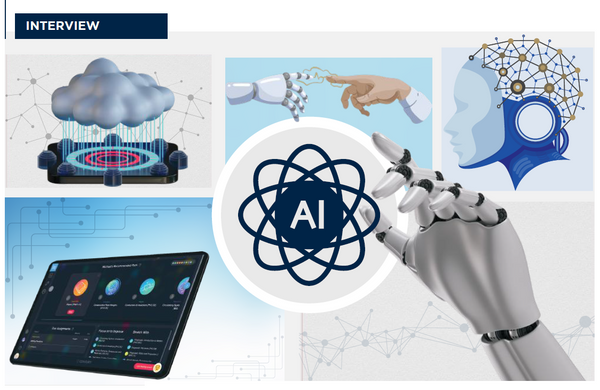
The rapid development of artificial intelligence (AI) is reshaping every aspect of society and education ever evolving. As AI continues to transform, it is fundamentally altering knowledge acquisition, classroom dynamics, and the skill sets required for future generations.
-
A Parent’s Guide to Choosing the Right International School
The early years of a child’s education lay the foundation for cognitive, social, and emotional development, making the choice of school one of the most significant decisions parents face. With so many options available — each offering different curricula, teaching approaches, and philosophies — it is natural for parents to feel both excited and overwhelmed.
Featured Products
Harvard Model United Nations Overseas Academic Exchange Programme 2027
Experience an unforgettable 9-day academic and cultural journey across Boston and New York, featuring the prestigious 4-day HMUN Boston Conference, Top University Visits and US Cultural Exploration. Join around 4,000 delegates from 50+ countries, connect with Harvard student organisers, visit leading universities including Harvard, MIT, Yale and Columbia, and discover iconic landmarks and cultural highlights across two of America’s most vibrant cities.
Application Deadline: November 30, 2026General English Course: Online
2026 Private Executive Communication Mentorship
Invest in the Edge that Sets Your Child Apart.
In school, in interviews, in leadership roles — communication directly influences results.
In 12 weeks, your child can develop the communication skills that shape how people see and remember them, forever.
The 2026 Private Mentorship is a personalized, one‑to‑one immersion that improves how your child thinks, speaks, writes, and presents themselves, at school and in every setting that matters.
Format: One to One
Duration: 12 Weeks
Frequency: Twice Weekly
Session Length: 60 Minutes
Total Sessions: 24
Communication Assessment & Individual Plan (60-Minute In-Person Session) We assess your child's current communication habits and skills to identify their key strengths and areas for improvement. Includes a tailor-made mentorship plan with feedback and recommendations.
Interested in learning more?
Register for our webinar,
Communication Is Not a Soft Skill Anymore
on 20 Aug 2026,
to discover why communication, critical thinking and real-time interpersonal skills are becoming even more important in the age of AI.
Guilin Geographical & Cultural Expedition
*** The fee including meal, accommodation, learning programme, group travel insurance.