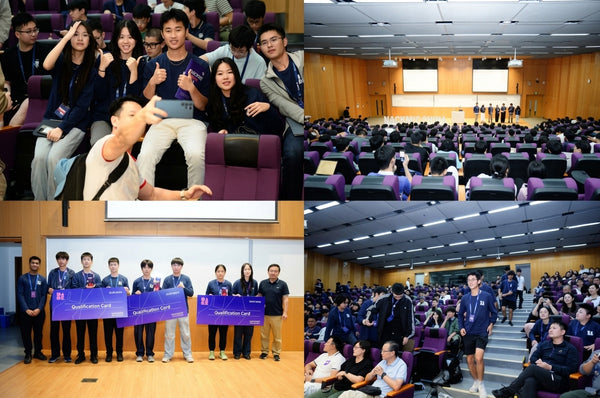

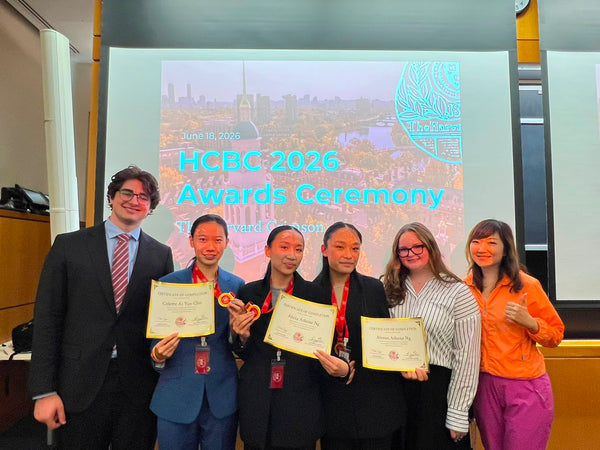






There is an important distinction between delivering professional development programmes and cultivating a culture of learning. One focuses on activity; the other shapes identity. A culture of learning reflects who we are as an organisation and how we grow together. This is the central purpose of the AISL Academy: to move beyond segmented training opportunities towards a shared commitment to continuous professional growth.
Across our schools, we are deeply committed to unlocking the potential of every student. This commitment must be matched by how we nurture the potential of those who work within our communities, by our teachers, leaders and professional staff. As part of the AISL Academy’s mission to promote engagement and strengthen a culture of learning, a three-part Learning Campaign series is established around a simple but powerful belief: that continuous professional learning should not exist alongside daily work as an additional requirement, but should be woven into the fabric of how we think, practise and develop together, and educational research supports this approach. Garvin, Edmondson and Gino (2008) describe learning organisations as those in which learning is continuously created, shared and embedded in everyday practice.
Within school contexts, this means moving beyond isolated training events towards an environment where professional growth becomes habitual, collective and sustained.
THE IMPORTANCE OF A LEARNING CULTURE
Professional learning can often be experienced as a series of disconnected activities, with learning sessions here, webinars there, and periodic certification requirements. These opportunities are valuable, but they are not sufficient on their own. What transforms professional growth is not simply access to learning, but the environment that makes learning feel purposeful, trusted and shared.
Edmondson’s (2019) research on psychological safety shows that individuals learn most effectively in environments where they feel confident to question, reflect and experiment without fear of judgement. In such contexts, educators are also more able to contribute meaningfully and help shape the learning pathways that support their professional growth. Similarly, the OECD (2021) emphasises that strong professional learning cultures are defined by collaboration, trust and collective responsibility, rather than by compliance-driven participation. When learning becomes part of how both academic and non-academic staff think, work, and collaborate, schools are better positioned to adapt, innovate, and thrive.
A culture of learning is one in which curiosity is actively encouraged rather than treated as exceptional; where questions are valued alongside answers; and where innovation and experimentation are welcomed, even when outcomes are uncertain. Research on psychological safety and learning organisations demonstrates that such environments enable individuals to engage more deeply in reflection, inquiry and professional growth (Edmondson, 2019; Garvin, Edmondson & Gino, 2008). Within this context, learning is no longer viewed as a task to be completed. Instead, it becomes part of professional identity, shaping how individuals think, work and connect with one another. Over time, learning forms an integrated whole, influencing the very DNA of professional practice and organisational culture (Wenger, 1998; Timperley, 2020).
THE SPARK: AA’S LEARNING CAMPAIGN
The AA Learning Campaign was not designed simply to reward point-scoring or to celebrate the most active learners, although these moments of recognition remain important. Instead, the campaign is initiated for deeper and more strategic reasons: to support the continuous upskilling and reskilling of staff in response to evolving educational demands, and to strengthen a shared culture of professional learning across our schools. The initiative offers a structured opportunity for professional development while looking to develop a sense of community and shared purpose.
Making learning visible
Professional learning often takes place quietly and individually. While this can be effective, it can also limit opportunities for shared reflection and collective growth. The Campaign sought to bring learning into the communal space. When teachers and staff see one another engaging in learning, sharing ideas, experimenting with new practices and supporting colleagues, it changes the professional climate. Darling-Hammond et al. (2017) note that professional learning is most impactful when it is collaborative and embedded within communities of practice rather than undertaken in isolation. Visibility reinforces the message that learning is valued and that growth is a shared endeavour.
Building momentum and consistency
Sustainable learning does not happen in short bursts. It develops through regular engagement and purposeful continuity. Timperley (2020) emphasises that effective professional learning is ongoing, iterative and closely connected to everyday practice. The Campaign introduced a rhythm of engagement through clear focus, shared checkpoints and opportunities to celebrate progress. This helped establish consistent learning habits and reinforced the idea that professional growth is a long-term journey rather than a one-off initiative.
Reinforcing shared commitment
If professional learning is central to our mission, then our systems, language and routines must reflect that value. The Campaign signalled that learning is not optional but integral to who we are as an organisation. By providing a shared framework across schools, it strengthened collective responsibility and professional identity, positioning learning as a common purpose. In an era of rapid change, sustained upskilling and reskilling are increasingly recognised as essential for organisational adaptability and long-term success (OECD, 2021; World Economic Forum, 2020).
“Edmondson’s (2019) research on psychological safety shows that individuals learn most effectively in environments where they feel confident to question, reflect and experiment without fear of judgement.”
FROM CAMPAIGN TO MOVEMENT
The AA Learning Campaign represents a beginning, not a destination. The challenge now is to translate momentum into lasting cultural practice. Several key principles emerged during the Learning Campaign.
Professional learning should not feel like an additional burden. It should be integrated into staff meetings, planning sessions and leadership conversations. School-based professional development, complemented by continuous AA learning, embedding learning in daily life enables the campaign to act as a value-added structure rather than a parallel system. Motivation grows when staff see how their learning links directly to student outcomes, wellbeing and community impact. Schools increasingly guide AA learning provision in line with their strategic priorities, connecting learning to purpose, ensure alignment between professional growth and organisational goals.
By encouraging and supporting professional agency, learning becomes most effective when individuals can exercise choice over what, how and when they develop. Self-Determination Theory (Deci & Ryan, 2000; 2020) identifies autonomy, competence and relatedness as key drivers of motivation. Through the Learning Campaign, staff are empowered to select self-paced courses and webinars aligned with their professional interests and needs, supporting autonomy. A broad range of learning opportunities strengthens individuals’ sense of competence, while the shared and visible nature of the campaign fosters relatedness across schools. As educators exchange learning experiences and acknowledge one another’s progress, communities of practice begin to emerge, further enhancing motivation and sustained engagement.
The AA Campaign provided structured pathways, but its greatest strength lay in enabling educators to select learning that resonated with their professional goals, whether academic or non-academic in focus.
MOVEMENT TO A SHARED COMMUNITY
The AA Learning Campaign provided a launchpad for collective growth. The real journey, however, lies in the everyday ways we choose to learn together. Creating a culture of learning is not a one-off project. It is a shared commitment to support one another, remain curious, embrace challenge and find purpose in collective growth. When learning becomes part of how we think, speak, work and celebrate, we do more than develop professionally. We strengthen the heart of our organisation.
“That is culture.
That is consistency.
That is community.
That is our AA shared future”
Read the full issue here
REFERENCES
1. Darling-Hammond, L., Hyler, M. E., & Gardner, M. (2017). Effective Teacher Professional Development. Learning Policy Institute.
2. Deci, E. L., & Ryan, R. M. (2020). Self-Determination Theory: Basic Psychological Needs in Motivation, Development, and Wellness. Guilford Press.
3 Edmondson, A. (2019). The Fearless Organization. Wiley.
4. Garvin, D. A., Edmondson, A. C., & Gino, F. (2008). Is Yours a Learning Organization? Harvard Business Review.
5. OECD (2021). Teachers and School Leaders as Valued Professionals. OECD Publishing. Timperley, H. (2020). Professional Learning and Development in Education. Springer.