






Harvard Undergraduate Science Olympiad China
Harvard Undergraduate Science Olympiad China
Application Deadline: 5 August 2026
Special Offer: For two participants registering together, enjoy a discount of HK$300 per person — DM and get the discount code from us!



Description
Learning Outcomes
*Upon enrolment and successful admission into this programme, you will be eligible for scholarships for the Coursera online courses leading to the Google Career Certificate, available exclusively on AISL Mall.

What is Harvard Undergraduate Science Olympiad (HUSO)?
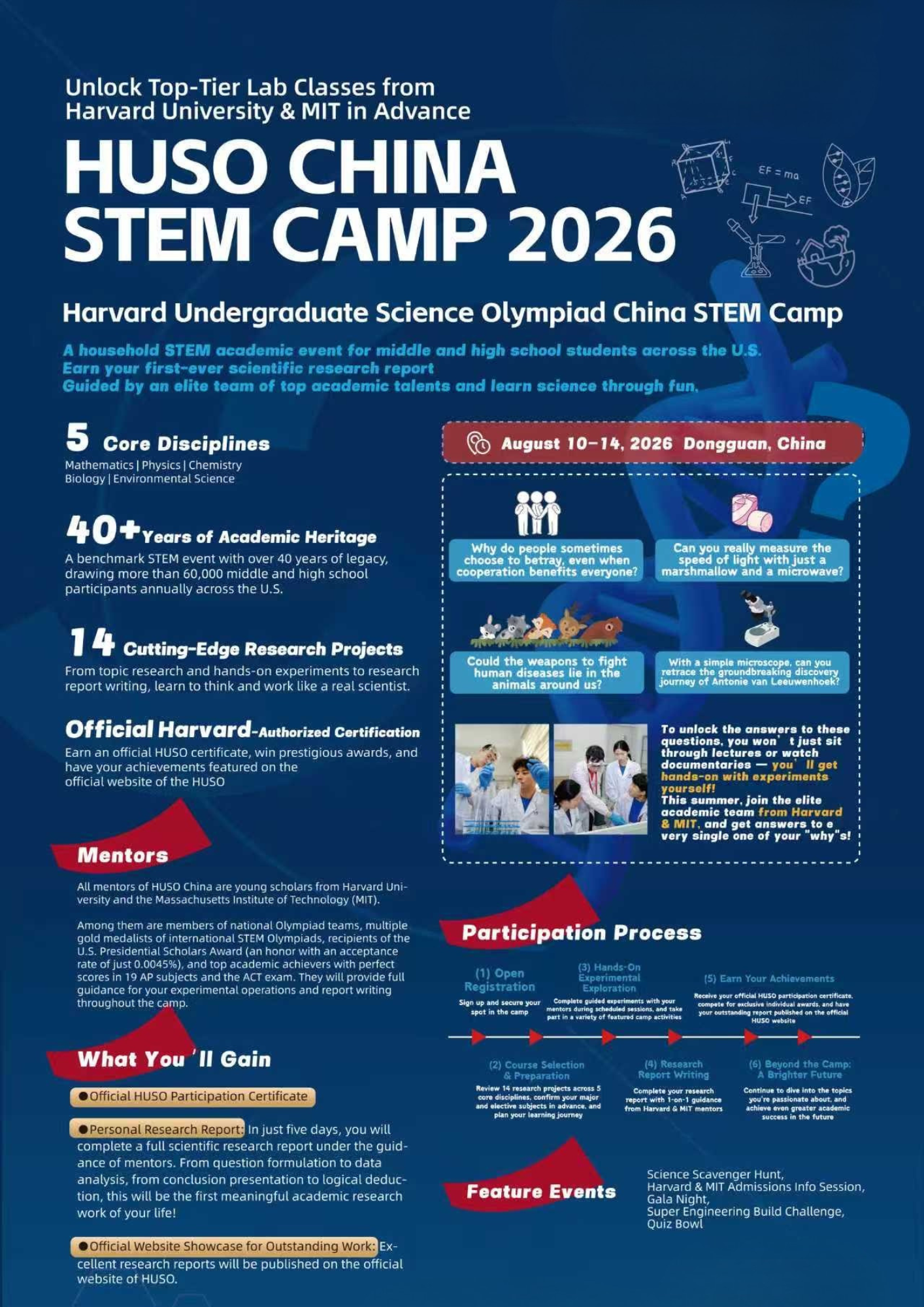
The Harvard Undergraduate Science Olympiad (HUSO) is an undergraduate student organisation at Harvard University dedicated to providing accessible S.T.E.M. education to K-12 students. The Science Olympiad, the authorised unit of the Harvard Science Olympiad, originated in 1984 and has been steeped in history for more than 40 years. Each year, it attracts more than 6,600 teams from all 50 states and more than 60,000 U.S. high school students, and has become an event widely recognised by U.S. universities. Our mission is to ignite curiosity, foster creativity, and introduce young minds to the vast and interconnected world of STEM. Participants first begin with open-round examinations that challenge students to apply what they’ve learned in unique and interesting ways and encourage them to build a strong foundation across STEM. Qualifying candidates are then invited to a week-long STEM camp run by Harvard Undergraduate Science Olympiad (HUSO). Through hands-on experiences, mentorship from experts, and exposure to cutting-edge topics they may have never encountered before, participants will gain a deeper appreciation for the power of interdisciplinary science.
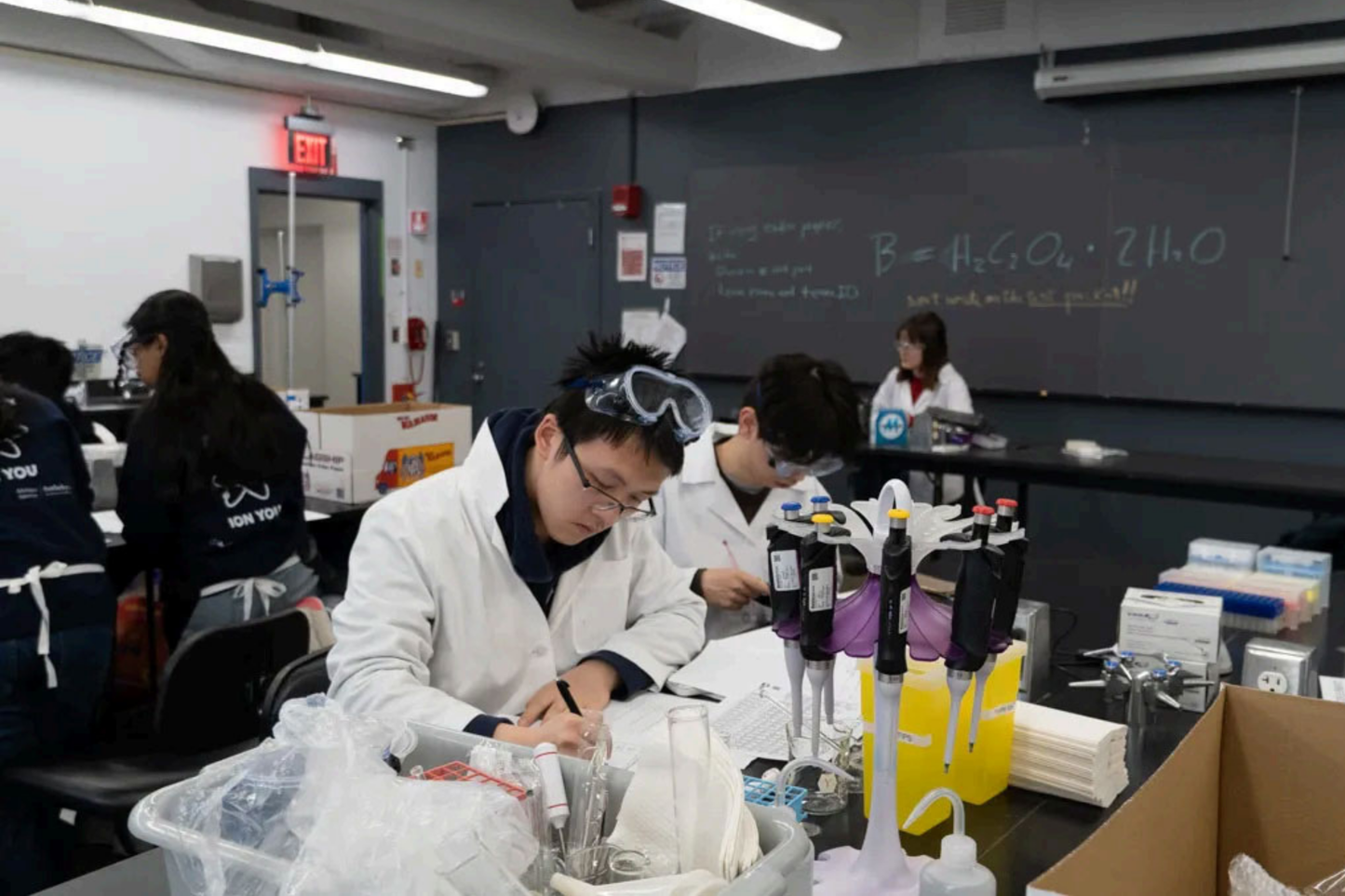
Building on this foundation, the Harvard Science Olympiad Challenge · China (HUSO China) was born. It is a 5-day immersive research experience camp, created by the Harvard Undergraduate Science Olympiad specifically for middle and high school students in China. The program will take place from August 10 to 14 in China, open to students in grades 7 through 12.
There are Five Academic Disciplines to choose as your path:
- Biology
- Earth Science
- Chemistry
- Physics
- Mathematics
Guided by young mentors from world‑class institutions such as Harvard and MIT, participants will engage in hands‑on experiments, research discussions, and report writing across disciplines, including mathematics, physics, chemistry, biology, and environmental science. Through this journey—from asking questions to making discoveries—students will experience the full process of scientific inquiry and ignite their passion for STEM.
Think Like a Scientist, Gain Your First
Research Experience
This year, HUSO China takes on an even purer form—a "Science Exploration Camp." Seven young mentors from Harvard and MIT will guide students throughout the journey, starting from real, tangible questions. Through interdisciplinary workshops, hands-on experiments, group discussions, and research reports, each participant will walk away with their very own "first research experience."
At HUSO China,
you'll discover that science isn't something
you memorise—it's something you do.
Here, you'll find a true "team of academic superstars"—seven young scholars from Harvard and MIT who will mentor you every step of the way. Among them are members of the U.S. Olympic national team, two-time silver medalists at the International Chemistry Olympiad, and recipients of the U.S. Presidential Scholar Award—an honour granted to only 0.0045% of students. From curriculum design to report feedback, everything is led personally by them. This is not a "celebrity lecture series"—it's a five‑day, deep academic journey alongside some of the brightest minds.
HUSO-China consists of two rounds of written exams spanning Biology, Chemistry, Earth Science, Physics, and Mathematics. These encourage students to build a strong foundation across multiple fields of STEM and introduce them to the interdisciplinary nature of science.
Open Round
In the open exams, you will have 2.5 hours to complete the test packet which contains all 5 subjects and can be done in any order. Open exams are multiple choice only and each question is +1 for a correct answer and -0.25 for an incorrect answer. Your subject score is calculated relative to how well others perform on that subject and your total score is the sum of your best 4 subject scores.
Click here to access the Open Exam Syllabuses.
Final Round
The HUSO China Finalist Camp is an immersive experience for students who qualify from the initial exam, offering a unique blend of academic challenge and hands-on exploration. During the camp, participants will take their final exams while deepening their understanding of core STEM disciplines. Beyond exams, students will engage in dynamic, hands-on workshops that highlight the exciting intersections of science, technology, engineering, and mathematics. Through interactive experiments, collaborative projects, and mentorship from Harvard and MIT students, attendees will gain a strong foundation in STEM while discovering the power of interdisciplinary innovation. This camp is not just about learning—it’s about inspiring the next generation of trailblazing scientists and problem-solvers.
Workshops Information
-
Maths
When Cooperation Fails: A Hands-On Introduction to Game Theory (Yufei) Why do people sometimes refuse to cooperate, even when cooperation would benefit everyone? Yufei’s game theory workshop lets you play a hands‑on version of the Prisoner’s Dilemma—don’t underestimate this game. The incentives it reveals can explain everything from business competition to international relations. From there, we’ll explore the Hawk‑Dove model to see how the same mathematical tools describe competition and coexistence in the animal world.
Introduction to Machine Learning (Yufei) Curious about machine learning? Yufei’s other session starts from the ground up. Using Jupyter Notebook, you’ll train a simple model yourself. From linear classifiers to neural networks, you’ll witness firsthand when the model gets it right—and when it gets confused. So this is what powers the recommendation systems and spam filters we use every day.
The Mathematics of Infinity (Kathy) In Kathy’s mathematical world, infinity isn’t a single number—it’s a maze. Some infinite sets are actually larger than others? Through mind‑bending yet fascinating thought experiments like Hilbert’s Hotel and Cantor’s diagonal argument, you’ll build an intuitive understanding of infinity step by step.
The Mathematics of Paradoxes (Kathy) If you enjoy spotting logical flaws, Kathy’s other workshop is for you. How does a seemingly flawless mathematical proof end up claiming that 1 = 2? What’s really wrong with Zeno’s paradox about Achilles and the tortoise? By dissecting these classic mathematical paradoxes, you’ll see how small reasoning gaps can lead to astonishing conclusions—and how paradoxes themselves have driven the evolution of mathematical thought time and again.
-
Physics
Pressure, Gas Laws, and the air around us (Daniel) Air is invisible and intangible, but Daniel has a way for you to “grab” it. With just a syringe and a few weights, you can measure the molar density and pressure of the air right in your own classroom. Through this experiment, you’ll also learn tools that physicists use every day—linear fitting, uncertainty calculation, and more. Understanding the invisible forces around us isn’t as hard as it seems.
Reconstructing Fundamental Constants from First Principles (Daniel) And Daniel’s other experiment? It’s practically made for the food‑loving scientist. Measure the speed of light using marshmallows and chocolate in a microwave? Yes—by observing the melting patterns left by standing waves on your snacks, you can calculate the wavelength, combine it with the frequency, and derive one of the most fundamental constants in the universe. Einstein’s theory of relativity might feel distant, but the speed of light? You can measure it yourself, right now.
-
Chemistry
Intro to Organic Chemistry (Bianca) Ever wanted to understand those complex “hexagons” in your chemistry textbook? Bianca’s introductory organic chemistry workshop will take you step by step—from skeletal structures to functional groups—helping you see how molecular structure determines reactivity. Through 3D molecular visualisation, you’ll actually “see” those abstract structures with your own eyes. Organic chemistry isn’t as hard as it seems—it’s right there in the clothes you wear, the perfumes you smell, and the medicines you use.
Exploring the World of Proteins (Bianca) Bianca’s other workshop takes you into the microscopic world of proteins. From amino acids to complex three‑dimensional structures, from protein folding to biological function—you’ll get to use tools that real scientists rely on: PyMol for molecular visualisation, and the Nobel Prize‑winning AlphaFold for protein structure prediction. It turns out that life’s most intricate “molecular machines” can also be simulated and predicted by computers.
-
Biology
Comparative Medicine: What Animals Tell Us about Human Disease (Runyi) Have you ever wondered whether the answers to human diseases like fainting, heart disease, or cancer might actually lie in animals? In Runyi’s workshop, you’ll step into the world of comparative medicine. From wild animals to laboratory mice, how do scientists observe animals to develop more effective drugs and therapies? This session will give you a whole new understanding of the weight behind the word “evolution.”
Discovering Science (Runyi) Bianca’s other workshop takes you into the microscopic world of proteins. From amino acids to complex three‑dimensional structures, from protein folding to biological function—you’ll get to use tools that real scientists rely on: PyMol for molecular visualization, and the Nobel Prize‑winning AlphaFold for protein structure prediction. It turns out that life’s most intricate “molecular machines” can also be simulated and predicted by computers.
Exploring the World of Proteins (Bianca) Runyi’s other classroom feels more like a journey into “scientific archaeology.” We all know that mitochondria are the powerhouses of the cell—but what did the scientists who first discovered this actually do? You’ll recreate the classic experiments that made history, using foldable microscopes to observe cell slides, retracing the steps of the pioneers of biology. It turns out that scientific discovery can be traced, step by step.
Exploring the World of Proteins (Bianca) Bianca’s other workshop takes you into the microscopic world of proteins. From amino acids to complex three‑dimensional structures, from protein folding to biological function—you’ll get to use tools that real scientists rely on: PyMol for molecular visualisation, and the Nobel Prize‑winning AlphaFold for protein structure prediction. It turns out that life’s most intricate “molecular machines” can also be simulated and predicted by computers.
-
Environmental Science
Designing Clean Water Systems (Annabel) Every day, we turn on the faucet and clean water flows out—but how do cities actually turn polluted river water into drinking water? Annabel will invite you to play the role of an environmental engineer for a day. Using aluminum sulfate to simulate coagulation and flocculation, comparing different filtration materials, and treating a batch of simulated wastewater yourself, you’ll learn the principles behind purification technologies like particle settling and surface interactions. You’ll come to understand that a glass of clean water is the result of a precise collaboration between chemistry, physics, and engineering.
Chemistry of a Changing Ocean (Annabel) And if you care about climate change, Annabel’s other workshop will take you beneath the ocean’s surface. What happens to the oceans when atmospheric carbon dioxide rises? By simulating a seawater system containing salt and bicarbonate, you’ll predict changes in pH firsthand and see how acidification threatens the survival of shellfish and other marine life. This isn’t just a distant environmental issue—it’s a scientific question you can verify with experimental data.
Special Events
Science Scavenger Hunt
Harvard–MIT College Night
Carnival Night
Build Challenge: Face‑Off
Quiz Bowl
The Quiz Bowl is a fast‑paced academic competition that challenges participants across a broad range of subjects, including biology, physics, and other core disciplines. Students will form teams of four to five, testing their breadth of knowledge, speed of thinking, and collaborative strategy as they compete in a dynamic buzzer‑style format. Designed to encourage intellectual agility and teamwork, the Quiz Bowl celebrates academic excellence, with the top three teams recognised as winners for their outstanding performance.
Participation Process
- Round 1: Registration Deadline is on 23:59, May 15, 2026. Early bird price will grant access to academic materials.
- Round 2: Registration Deadline is on 23:59, August 5, 2026.
- Get Syllabus of Quiz Bowl.
- Receive Notification of Event Participation
- HUSO China Challenge
Location
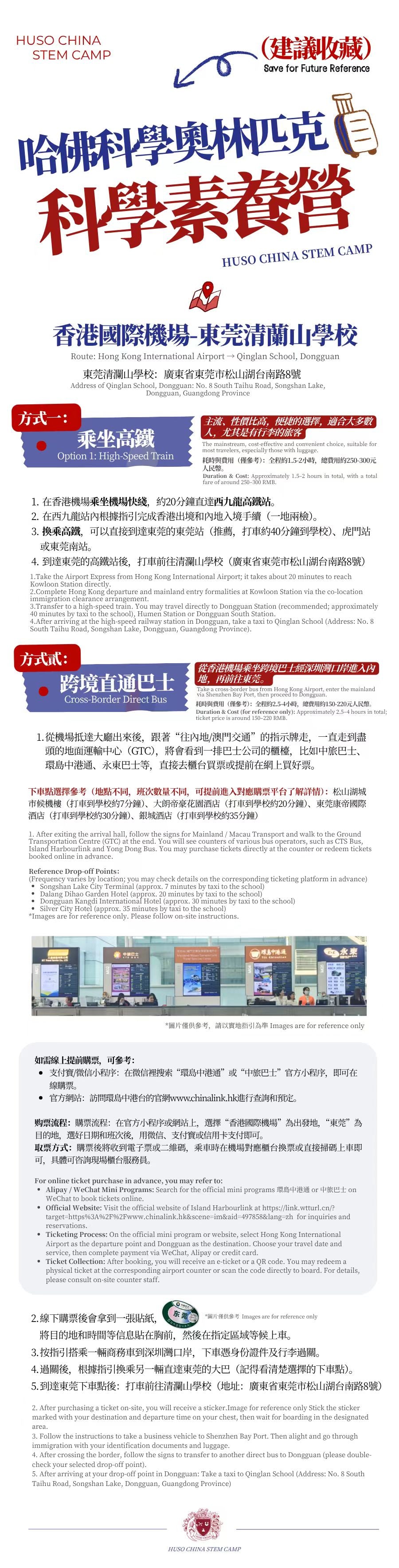
Qinglanshan School, Dongguan, Guangdong
Dates
10 - 14 August 2026
Registration Period
First Round Deadline: 15 May I Second Round Deadline: 5 August
Eligibility
Grade 7 - 12 (12 - 18 Years)
Who Should Join?
This programme is ideal for:
- Students with a strong interest in STEM fields such as Mathematics, Physics, Chemistry, Biology, and Environmental Science, eager to go beyond textbooks and explore scientific mysteries through hands‑on experiments.
- Students without a clear STEM foundation but with enthusiasm for scientific exploration, seeking professional guidance from leading Harvard/MIT scholars to identify and develop their academic interests.
- Students aiming to enhance logical thinking, practical skills, teamwork, and academic expression in English, while experiencing Harvard/MIT‑standard laboratory classroom models in advance.
- Students planning to apply to top overseas universities, wishing to gain authoritative STEM academic experience, complete individual research reports, and add high‑value highlights to their application portfolios.
- Students keen to connect with outstanding peers nationwide, engage closely with Harvard/MIT top achievers, gain insights into elite university applications, and broaden their international academic horizons.
Awards
Participants will receive a full set of recognised academic and project achievements, including:
- A complete research project report
- Full documentation of hands-on experimental work
- A professionally written academic research paper in English
- Team challenge project results and deliverables
- Official participation and award certificates issued by the organisers
Fee Information
HKD 8,400 per person (Includes accommodation and meals during the competition, but excludes round‑trip transportation)
Refund Policy
- The fees for the HUSO China 2026 include on-campus accommodation and meals during the camp, teaching materials, venue usage and other related expenses.
- If a student requests to withdraw from the camp for personal reasons after full payment has been made, the refund shall be processed at different ratios according to the date of application for withdrawal:
- If the student requests withdrawal before May 1, 2026 (excluding May 1), the organizing committee shall deduct 25% of the total program fee as liquidated damages and refund the remaining amount.
- If the student requests withdrawal between May 1, 2026 (inclusive) and June 30, 2026 (inclusive), the organizing committee shall deduct 55% of the total program fee as liquidated damages and refund the remaining amount.
- If the student requests withdrawal on or after July 1, 2026 (inclusive), the organizing committee shall not process any refund.
- If the student is unable to participate or continue the program due to illness either before or during the Science Literacy Camp, the student’s guardian shall notify the organizing committee in writing and provide valid medical certification. The organizing committee shall deduct the relevant incurred expenses and refund the remaining balance within thirty (30) calendar days.
Schedule
|
Day 1 - August 10, 2026 |
|
|
Day 2 - August 11, 2026 |
|
|
Day 3 - August 12, 2026 |
|
|
Day 4 - August 13, 2026 |
|
|
Day 5 - August 14, 2026 |
|
In partnership with
